

Adult lingual orthodontics
Invisible braces for adults
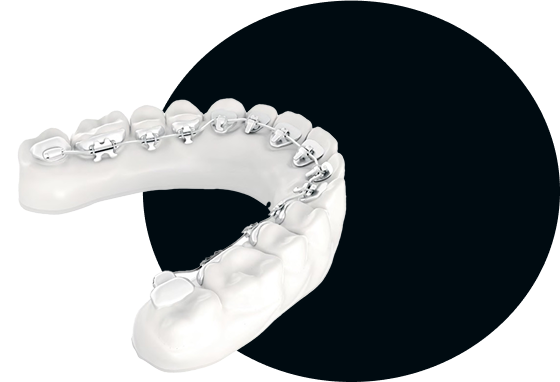
The term “lingual” refers to the application of the attachments (backets) on the inner surface of the teeth (lingual), facing the tongue, where they are totally invisible, rather than on the outer side facing the lip and exposed to the smile.
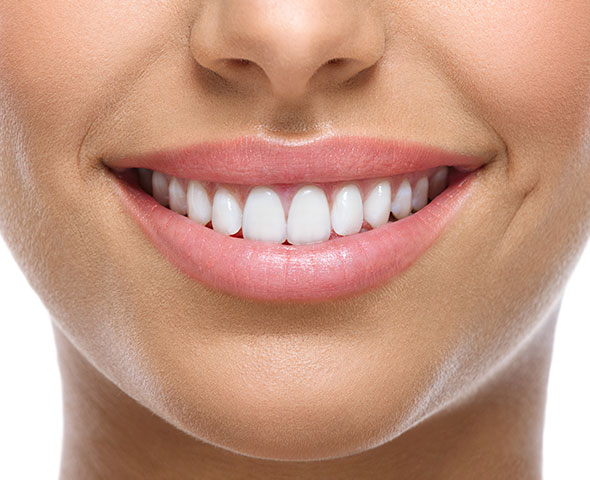
Today, the great merit of lingual orthodontics is that no one can notice that the patient is having orthodontic treatment; the patient can continue his or her normal lifestyle while wearing lingual braces that with complete discretion will correct his or her teeth and improve his or her smile.
Patients want to achieve well-aligned teeth at the end of orthodontic treatment but also to be able to smile during treatment without having to show the aesthetic clutter of conventional orthodontic braces, metal plates or clear ones.
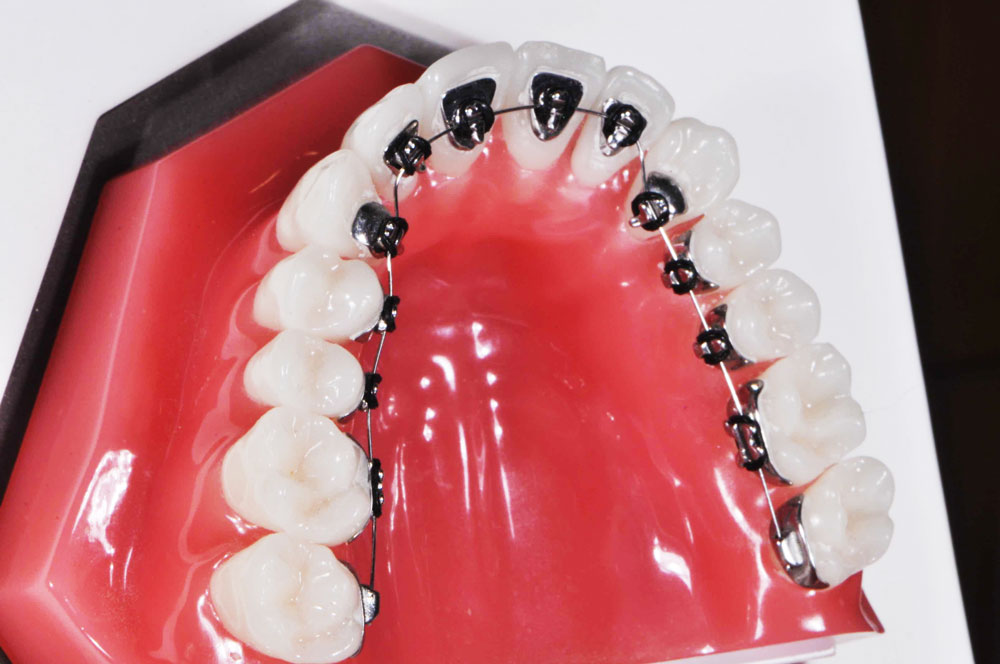
Lingual braces can be applied at any age; it is to dispel the “cliché” that orthodontics is only applicable and effective during adolescence because there is no age limit for the application of orthodontic braces as long as the supporting tissues of the teeth are in good health and the teeth are firmly secured within the bone.
The patient’s age has no influence on tooth displacement, and the latest generation of orthodontic appliances through the use of super-light forces and systems that work in almost complete absence of friction allow teeth to be aligned at an exceptional speed with reduced number of appointments and shorter treatment time; and allow the resolution of tooth crowding that previously required tooth extraction. Today our teeth can be corrected at any age and without annoying visible metal plates (brackets) that limit us in the most beautiful and natural thing: our smile.
Treatment Of The Adult Invisible Lingual Orthodontics
It is characterized by the fact that since there is no clinically significant skeletal growth, there is a need for tooth displacement planning (space recovery) to correct the malocclusion.
The most common indications for orthodontic treatment of adults are: mild skeletal malocclusions, dental malocclusions, joint problems, and aesthetic and/or psychological considerations.
Combined orthodontic-surgical treatment
Some severe malocclusions, where the skeletal discrepancies of the two jaws (ratio of mandible to upper jaw) are significant, cannot be resolved by orthodontic treatment alone, but require the help of orthognathic surgery. Resolution of this type of problem usually requires a combination of orthodontic treatment and surgical correction in order to give the patient an aesthetically pleasing result and a functionally sound occlusion.
Advantages of orthodontic treatment in adults
Orthodontic treatment achieves tooth alignment by repositioning the dental arches in a proper functional relationship so as to have good chewing and achieve a pleasant and harmonious smile in the facial context.
Aligned teeth are easier to clean and maintain optimal health of gum tissue (prevention of periodontitis and tooth loss) and teeth (prevention of caries).
The purpose of orthodontic treatment is to achieve balance and harmony between the teeth and the face and to ensure the functionality of the masticatory system by helping to prevent temporomandibular joint (noise, joint pain) and/or muscle (e.g., headaches) disorders that often accompany them, sometimes related to the presence of malocclusion.