

Non-surgical treatment of periodontitis
The non-surgical treatment for gum disease
During the specialist examination of the gums, was there evidence of both deep and superficial inflammation of the gums and tissues that hold the teeth firmly in the mouth?
Your dentist will have prescribed active periodontal therapy.
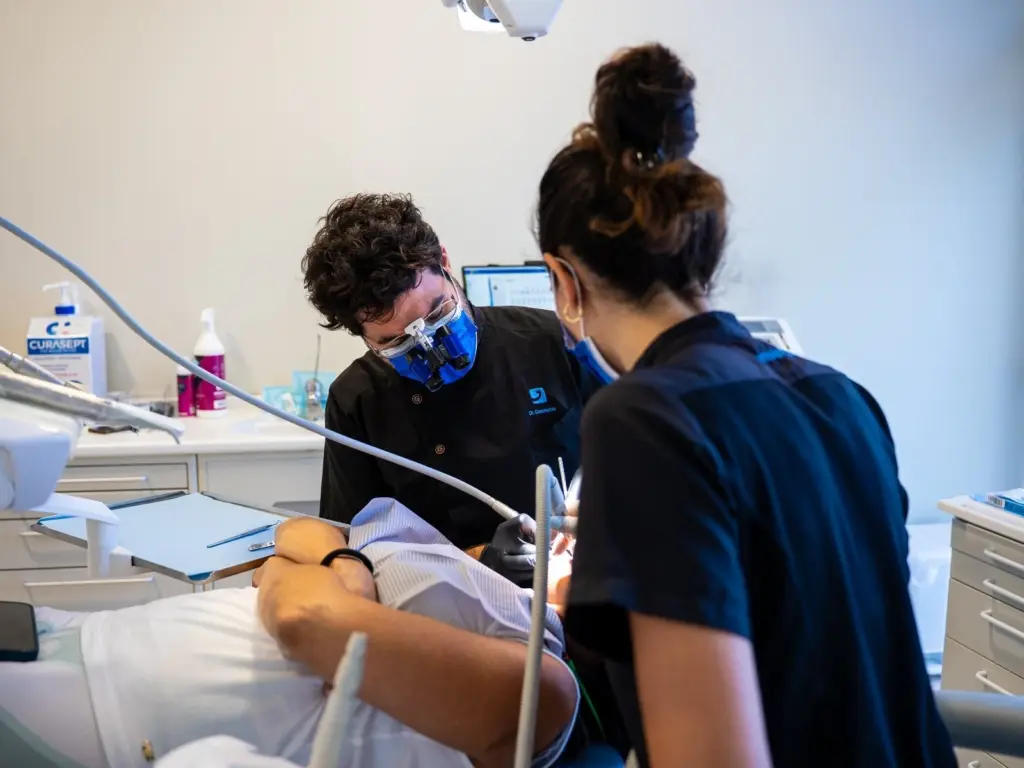
The therapy is divided into 3 phases
Stage of control and cleaning of supragingival bacteria and tartar. (Needleman, Nibali & Di Iorio, 2015; Trombelli, Franceschetti & Farina, 2015)
Subgingival instrumentation stage with ultrasound, powders, antiseptics, in which they sell removed all causes of deep inflammation and subgingival tartar (Suvan, et al. 2019)
Home oral hygiene instruction
Patients undergoing periodontal care should receive careful and detailed oral hygiene instruction and motivation to correct incorrect habits and lifestyles that increase the risk of worsening. (Van der Weijden & Slot, 2015)
Of non-surgical treatment
Nonsurgical periodontal therapy should always be performed before any surgical technique.
It is possible to instrument the mouth with ultrasound either in close sessions over 24 hours (full mouth approach) or in multiple spaced sessions (quadrant approach).
In some cases, the use of local anesthesia is strongly recommended to perform all procedures painlessly. To remove all tartar, even very deep tartar, in fact may cause discomfort to the patient.
Once all causes of inflammation are removed, periodontal pockets, pockets filled with bacteria and inflammatory tissue around the teeth, begin to shrink.
Often minimally invasive nonsurgical periodontal treatment alone turns out to be sufficient to interrupt inflammatory processesand stabilize periodontitis even in deep defects (Nibali).
After healing at the end of the nonsurgical phase, at reevaluation, the dentist will repeat the periodontal examination performed at the beginning to compare measurements and indices of inflammation between before and after therapy.
If the situation has improved and a state of gingival health has been achieved, the patient will be placed on a supportive or maintenance therapy protocol.
If, as in other rare cases, the situation has not improved in some area, additional minimally invasive surgical periodontal therapy limited to unhealed areas may be necessary. (Nibali, et al. 2019)
What are the benefits of periodontal treatment
- Breath improvement
- Reduction of bleeding
- Reduction of gingival discomfort and swelling
- Healing from abscesses
- Reduced mobility
- Color change of the gingiva
- Improvement of local inflammation indices
- Improvement of systemic inflammation (improvement of blood tests)
- Improvement of blood glucose in diabetes
Frequently asked questions
What are the side effects? does it hurt?
Minor gum discomfort or temporary or sometimes permanent cold sensitivity may occur after nonsurgical therapy sessions.
After treatment, the gums deflate and there is slight gingival recession. However, the tissues will reattach to the tooth.
In case of mobile teeth, is tartar removal risky?
After periodontal treatment, frequently the tissues supporting the teeth become healthier and mobility is reduced.
Only in cases of excessive mobility (grade 3) where there is already an indication for tooth avulsion is there a risk of tooth loss.
How long does nonsurgical periodontal therapy last?
90 to 240 minutes
Nonsurgical periodontal therapy sessions last from 90 to 240 minutes depending on the severity of the disease and the number of sessions scheduled.