

Surgical treatment of periodontitis
Surgical periodontal therapy
Surgical treatment for gum disease
After performing nonsurgical periodontal treatment, a few months later, the periodontal dentist performs periodontal re-evaluation, which is a new compilation of the periodontal chart that allows us to obtain the new indices of the stage of disease or health, so that we can compare the data before and after treatment.
If a healthy state has been achieved, the patient will receive his or her supportive or maintenance therapy, which, through supra- and subgingival cleaning sessions, almost always without anesthesia because they are painless, aims to maintain the results achieved. For almost all cases of periodontitis, nonsurgical periodontal treatment succeeds in achieving the healing goals.
Conservative surgical therapy
Allows cleansing of pockets after creating surgical access. Provides for a few stitches at the end of surgery.
Osteoresective surgical therapy
Allows correction of bone defects created by periodontitis. Eliminates the pocket by acting on the bone that holds the teeth and gums. May have as side effects increased sensitivity and increased spaces between teeth.
Regenerative surgical therapy
In cases of very severe bone defects, biomedical engineering allows us to reduce and eliminate pockets by regenerating part of the bone share that periodontitis has caused to resorb.
Frequently asked questions
Is it painful?
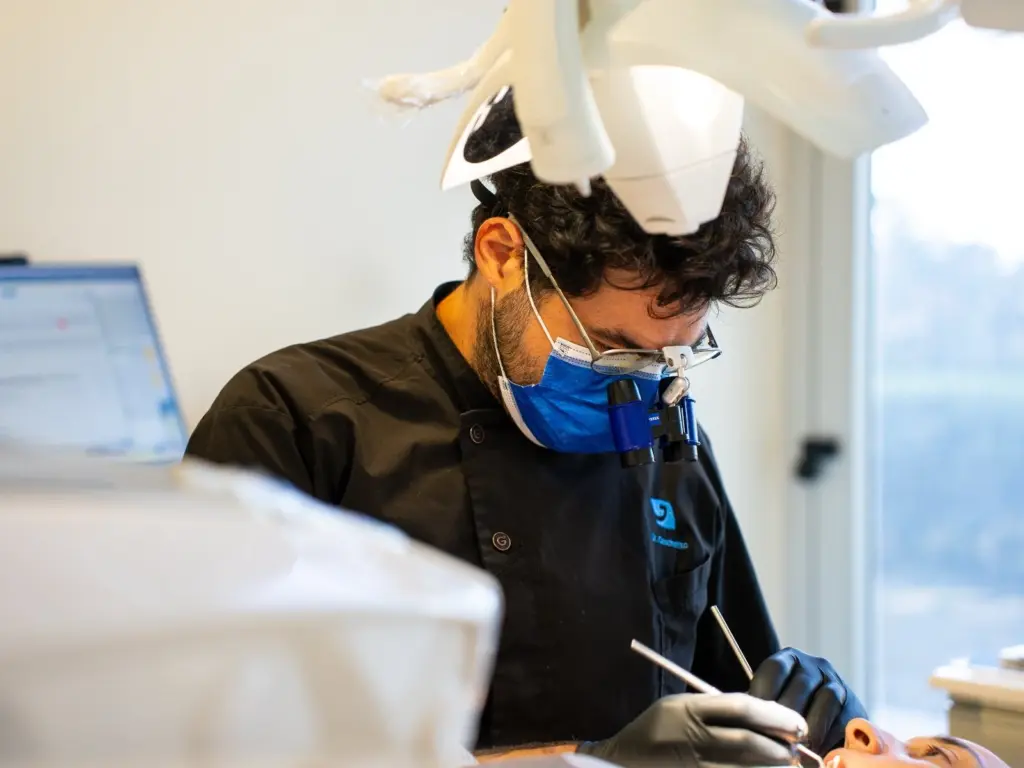
Periodontal Surgery over the years has evolved in both techniques and increasingly smaller, noninvasive instruments. The use of magnifiers allows us to open as little as possible, so much so that we talk about noninvasive microsurgery.
There is never any pain during the procedures.
Posttreatment drug therapy minimizes postoperative discomfort.
What are the benefits?
The benefits of undergoing this type of surgery are related to the stability of gum health over time.
What happens if you don't do it?
Not performing surgery increases the risk of disease progression. Persistence of pockets increases the risk that they may worsen.ntervention are related to the stability of gingival health over time.
When should it be done and by whom?
Periodontal surgery should be performed only at the end of a careful nonsurgical course.
Your dentist will know how to follow up with you.